This Drone for Hire: Meeting the Challenges of Solar O&M with Aerial Thermography

By Greg Shambo, VP of business development, Borrego O&M, Published in Solar Builder  | April 2023


As the world transitions to renewable energy sources, solar power has emerged as the most popular option due to its eco-friendliness and cost-effectiveness. However, the maintenance and upkeep of solar installations is a challenging task. Fortunately, emerging technologies such as aerial inspection employing manned aircraft, drones equipped with aerial thermography, and RGB photography have revolutionized solar operations and maintenance (O&M).

Aerial drone-based thermal inspection uses infrared imaging to detect temperature variations in solar PV modules, cables and other system components. The use of drones in solar O&M has risen dramatically over the past several years, going from a cool novelty technology to an essential part of the toolkit. This article will explore several O&M challenge areas where leveraging innovative technologies can improve efficiency, reduce downtime, increase safety, and minimize maintenance costs.

Managing risk and worker safety
Managing risk and worker safety are critical aspects of solar O&M. Drones can help with both challenges by providing remote access to solar PV systems and reducing the need for O&M personnel to work in hazardous conditions.Learn how solar installers can maintain their reputation by participating in trust-based selling.

Drones capture high-resolution thermographic and RGB images and videos of solar PV systems, allowing O&M personnel to identify potential hazards, such as damage to system components, loose connections, or malfunctioning equipment. This information can be used to develop more effective risk management strategies and ensure worker safety.

Solar inspections can be dangerous for workers, since they often must climb onto roofs or traverse uneven or rocky terrain. By providing remote access to solar PV systems, drones reduce the need for O&M personnel to work at elevated heights and potentially be exposed to electrocution or arc-flash shocks.

The daily tasks of solar O&M are also physically demanding, requiring personnel to lift heavy equipment, climb ladders, and work in harsh weather conditions. Drones perform inspections and eliminate the manual labor required for these tasks, lessening the risk of injury and reducing insurance premiums. By identifying potential system issues early, drones can help minimize downtime while decreasing the need for O&M personnel to work in these types of environments. Experience has shown that sites using drones have largely eliminated hazardous man-hours.

Data logging and report generation
Data logging and report generation are requirements for most solar project sites. They help O&M personnel monitor the performance of solar PV systems and identify issues before they escalate into larger problems. Drones can play a crucial role with these tasks, providing high-quality data and analytics used to optimize solar PV system performance.

The high-resolution imagery of solar PV systems captured by drones provide technicians with accurate and detailed data on the condition of system components. Once reviewed, this data can be compiled into historical records of the site for future reference.

Automating the process of data collection for solar PV systems using drones also offers a notable advantage. A variety of mission planning software applications can be used to program autonomous flights, eliminating the need for manual inspections that are often laborious and time-consuming. As a result, the risk of errors due to human intervention are reduced, and the data is collected accurately and consistently.

The data captured by these flights is also used to effortlessly generate reports, providing O&M personnel with real-time data and analytics used for promptly dispatching crews to problem areas. Using this intelligence, O&M contractors are able to identify trends and patterns, provide solar clients more value, and make more informed decisions.

By automating the data logging and report generation process, drones can help O&M personnel save time and resources. In addition, this allows O&M personnel to focus on more critical tasks, such as identifying and correcting potential issues with the solar PV system.

Performing systemwide assessments
A Pilot in Command (PIC) using specialized flight software automates drone flights over an entire solar farm, eliminating the need for manual flights and reducing the possibility of human error. During these automated missions, the drone flies parallel with the solar rows in a back-and-forth pattern, often taking photos every 1-2 seconds with sufficient overlap for quality assurance. By pre-programming a drone with a flight path and local reference points, a single technician is able to conduct a sitewide assessment of a solar plant.

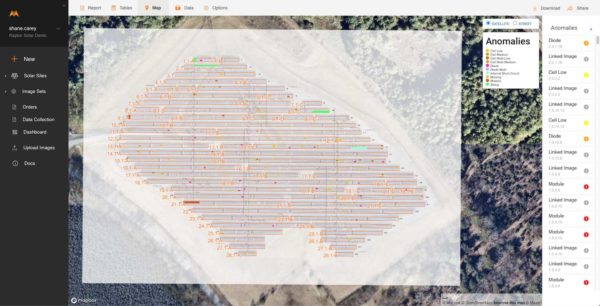
Once the flight concludes, the data is then imported to be analyzed, cross-checked with known latitude-longitude points, and used to create a map overlay of the site. These advantages result in a significant improvement in the efficiency and safety of site inspections compared to the approaches used previously, which often did not cover the entire system.

Skilled labor shortages and increasing costs

Borrego Solar

Skilled labor shortages and increasing costs are significant challenges facing the solar O&M industry. Drones can play a crucial role in addressing both challenges, providing a cost-effective and efficient way to manage solar PV systems. One study showed technicians spent 10 hours per MW inspecting solar modules manually, yet drones did the same job in 15-18 minutes per MW.

Switching from manual to piloted drone inspections reduced time spent per inspection by 97%. The shift from manual to drone inspections can represent over $1,000 per MW per year in labor cost savings.

To address these issues, O&M companies have several options:

Find more ways to integrate data systems.
Facilities managers need to lean into data analytics that are both predictive and prescriptive in the maintenance cycles. Data provided by drones through digital twins or inspections help reduce the need for skilled labor on the ground.

Regularly audit facility equipment and components.
It’s important to create a system that allows your team to actively track the condition, age, and performance level of every piece of equipment that’s critical to your facility. This system acts like a data feed that augments your predictive maintenance intelligence, keeping your team ready for what’s likely next on the repairs or replacement front.

Create and follow preventive maintenance checklists.
By automating preventive maintenance, downtime and costs can be reduced. Inspections performed by drones on a regular schedule and do not require teams of engineers and other skilled labor.

Drones have the potential to minimize expenses by eliminating the requirement for several skilled labor positions. Moreover, they are significantly more effective in conducting maintenance inspections and gathering data. Consequently, any action an O&M manager can take in these areas will lead to more cost savings for the company.

Adapting to changing technology
Another technology that has impacted the O&M solar industry is remote monitoring systems. With the advent of cloud computing and the future capabilities of an extremely fast 5G continuously connected network, O&M managers can remotely monitor the performance of solar facilities. These systems track critical performance parameters, such as energy output, temperature and humidity, in real-time, allowing for prompt action in case of deviations.

Drones provide access to set up these systems through advanced mapping, analysis and data collection. Think of drones as autonomous data-gathering machines that function as a part or a node in a broader network that’s gathering data and is interconnected with cloud computing.

Artificial intelligence (AI) and machine learning (ML) have also made significant inroads in the O&M solar industry. With AI and ML, O&M managers predict and prevent failures by analyzing large amounts of data collected by drones. These technologies also optimize the performance of solar facilities by analyzing weather patterns and adjusting the solar panels’ positioning.

Getting Started: Embracing innovation in solar O&M
The success of solar power is contingent not only on the excellence of the technology but also on the perception and endorsement of it by solar industry experts. O&M managers must embrace new technologies and tools to enhance their services continually. With the rapid advancements in technology, O&M businesses have access to drones, remote monitoring systems, AI and ML, which have revolutionized solar asset management.

As the demand for and deployment of solar accelerates, we must remain agile to ensure that existing and future photovoltaic assets deliver optimal performance and contribute to our worldwide goals of decarbonization and transitioning to clean energy.


Read  article on Solar Builder 

Solar investments are scaling up, but inefficient O&M is weighing them down

Published in PV Magazine

As solar investments boom across North America, project developers and asset managers alike are under increasing pressure to deliver ever-higher returns, making long-term O&M strategies a necessity for ensuring optimal performance. But while the growing number of asset owners choosing to outsource solar operations and maintenance to third parties is a sign of the industry’s maturation, many attempt to save costs by picking the cheapest service provider – or limiting contract scopes to fit whatever’s left in the project budget.

These short-sighted sacrifices often end up costing asset owners more in the long run, and costs like this can grow exponentially when scaling up a business. As O&M services for solar power plants become more complex, less sophisticated third-party providers seeking to cut costs themselves may end up creating inefficiencies throughout the project lifecycle. And as O&M challenges inevitably emerge from weather events or equipment issues, asset owners opting for bare-bones O&M contracts may face unanticipated expenses for necessary services.

Borrego understands this challenge from both sides. While we’re typically thought of as a project developer and EPC, we’ve also become one of the leading third-party O&M providers in the country, with over 75% of the 1.4GW we manage built by other companies. Here’s what we’ve learned about how to keep O&M offerings ahead of the curve.

O&M services for solar power plants is a lifecycle job

The industry has learned a lot of hard lessons since its early days when solar was considered to be practically maintenance-free other than occasional module cleaning and equipment checks. On the contrary, successful O&M requires continuous engagement across a variety of concerns throughout the project lifecycle, from due diligence during project development and construction to day-to-day operational performance and additional rounds of due diligence when buying or selling an asset.

For example, during the project development and construction phase, lenders may require third-party inspections, and in some cases, asset owners may need repair work for EPC build issues discoverable during the first year of operations such as poor underground cable installation or loose bolts. Projects then typically see growing needs for solar maintenance services to address system underperformance and equipment failures from year five onward. And as we see systems operating beyond 15 years, it often pencils out for asset owners to repower their systems (and potentially replace central inverters with string inverters).

Of course, unexpected O&M challenges can also occur at any time during a project’s life, often due to various forms of weather damage. These diverse and regionally-specific issues can include water damage from storms, misaligned equipment from erosion, panel damage from lightning, hail and wind damage, and soot from wildfires. Many if not all of these events have become increasingly common over the past decade, and climate change is virtually assured to increase their frequency given the decades-long lifespan of the solar assets being built today.

The hidden costs of inefficient solar operations & maintenance

Addressing any of these issues, whether owners discover them during regular operations or after a hurricane, can require O&M providers to conduct performance engineering analyses, site investigations and equipment upgrades or replacements.

Unfortunately, while system outages caused by aging equipment or weather damage are among the most common issues encountered by asset owners, these corrective steps may fall outside the scope of typical preventative maintenance packages. Yet many asset owners make the mistake of choosing O&M providers based on price alone – for instance, awarding a contract to an EPC offering a discount to close a follow-on O&M contract, or flexing down contract scope to match whatever’s left in the project budget – and end up incurring unplanned additional expenses to address issues on a case-by-case basis.

Process inefficiencies can also subtly erode returns. Many “national” O&M companies may not actually have the ability to quickly dispatch technicians in a given project region, leading to slow responses to outages and expensive downtime from delays in restoring service. Conversely, trying to juggle multiple local or regional O&M providers can become time-consuming and hard-to-meet quality standards as companies scale across geographies.

Further inefficiencies can emerge from poor technology and IT adoption. Companies of all sizes may fail to properly integrate IT capabilities across their business, leading to slow service or friction between different software tools. And when an O&M provider doesn’t provide real-time and adequate transparency in their data communications and reporting, they leave asset owners in the dark as these costs mount.

These additional costs potentially hidden in some O&M contracts are coming back to haunt a growing number of asset owners. Research from kWh Analytics found that US utility scale solar assets are underperforming their financed performance projections by 6.3% – and those single-digit production shortfalls today can compound into 40% reductions in equity cash flows over a decade. While underperformance isn’t always due to poor O&M services, cutting O&M spend and hoping for the best is a recipe for a vicious cycle that exacerbates shortfalls.

Poor financial performance is particularly problematic for organizations seeking to scale up their solar investments. Financing providers – who expect PV assets to deliver predictable cash flows – are demanding more precise modeling and becoming more careful in their scrutiny of operations, and persistent underperformance can impact access to capital for growth. Not surprisingly, all of these challenges multiply when project developers and owners seek to add battery storage, which promises increased project returns but also increased O&M complexity and new safety concerns.

How to recognize solar operations & maintenance done right

Sophisticated asset owners look for experience, communication and accountability, high standards and technology innovation in an O&M partner they can trust to support them in scaling up their solar and storage investments.

Experienceis understandably high on the list of O&M provider qualifications, but when asset owners are scaling up their solar investments, it’s experience with the entire project lifecycle, a deep technology bench and work across the full range of installation types and product manufacturers, and across geographies that has the most bankable impact. Experience across the entire project lifecycle helps to avoid inefficiencies of coordinating work across different companies and having the same provider who has been operating your plant for 15 years saves time and money when it’s time to repower. And an O&M partner with experience deploying teams across regions and working with diverse product manufacturers can help owners follow opportunities to grow in new market segments or regions.

Communication and accountability are key for any long-term partnership, and it’s absolutely essential when maximizing the performance of a complex asset with a 30-year lifespan. Having a provider that owners can trust to be proactive and transparent in their communications is table stakes for winning a contract, but some O&M providers will pitch cheaper packages to win deals while minimizing the likelihood of higher long-term costs. The best O&M providers are up front about the true lifetime costs of different contract options and will deliver detailed, timely reporting of maintenance service and operational performance across all of the projects in a portfolio.

High standards for quality of service should go without saying, but unfortunately, some O&M providers fall short on this. Rigorous standards need to be set for all O&M functions with safety at the top of the list, and providers must put in place processes geared to achieve total compliance across a customer’s entire portfolio. Responsible asset owners also demand a “trust but verify” approach. It’s important to have full transparency into what these standards are as well as the O&M provider’s level of performance against them as part of regular reporting.

Technology innovation is also a key differentiator for O&M providers, with a wide range of potential applications. Data-based decision-making tools quickly diagnose and remedy performance issues or even anticipate them before they become a problem; CMMS software ensures real-time responses to customer issues with consistent and efficient follow-up; and real-time asset monitoring dashboards deliver a steady flow of actionable data across project portfolios. That said, a company’s ability to smoothly integrate all of these tools into their daily operations is critical to take advantage of all these new capabilities without creating additional process inefficiencies, particularly as their customer base grows.

Scaling up O&M business alongside the industry

These insights about the factors that elevate leading providers of solar operations and maintenance guide how we are developing and scaling our own O&M business. Looking to maximize returns but ease their worries, savvy asset owners and investors scaling up their project portfolio can find value in an O&M provider that offers an owner’s mindset and the willingness and ability to scale with them, but the decision to invest in O&M must be made early in the financial analysis process. Like any other long-term relationship, successful solar O&M partnerships are built on trust, communication and a shared vision of the future.

***

Greg Shambo is the Vice President of Sales and Business Development for Borrego O&M and brings a strong business background with more than 10 years of experience in renewable energy. Greg’s passion for improving the sustainability of the planet through renewable energy projects spurs his approach to building long-lasting relationships with customers and teams.

The Energy Gang podcast: Managing large-scale solar

Of all the stages of a solar project, the operations and management stage is arguably the most crucial. When you’re thinking about project efficiency and financial returns in solar, you need to have a concise plan for the O&M stage.

Greg Shambo is Vice President of Business Development at Borrego. He says that ‘when you get into the operations stage, this is where you make the money. If you can’t operate profitably from day one, you end up losing money. We call these walking dead sites, because they were doomed to start with.’

For the last forty years, Borrego have established themselves as one of the most reliable names in the US solar and energy storage industry. From their early days as solar pioneers, to today – as leaders on the national energy storage stage – Borrego have delivered timely and secure management to solar projects. In 2014, Borrego launched a stand-alone O&M business for both EPC and non-EPC customers to help optimise and maintain system performance and help their clients achieve their financial goals.

Jay Smith also joins us, he’s the Director of Asset Management at Standard Solar, a client of Borrego.

On the show, Greg and Jay take us through the management of large-scale solar projects, and how clients can ensure they pick the best O&M provider for the job.

This episode was produced in collaboration with Borrego, a leading developer, EPC and O&M provider for large-scale renewable energy projects throughout the United States. With over 1.4 GW and more than 1,000 sites under its management nationwide, Borrego O&M is comprised of technical experts that have been helping customers maximise their asset performance and value for the last decade.

This sponsored content was built in partnership with Borrego and does not necessarily reflect the views of Wood Mackenzie group of companies, its employees or management.

View the landing page to hear all episodes of The Energy Gang.

To maximize solar performance, start thinking long term

By Greg Shambo, VP of O&M sales, Cleanleaf Energy  | Published in Solar Power World | November 23, 2021

When solar asset managers open their proverbial pockets to contract with a long-term O&M company, the opportunity to maximize solar plant performance is often doomed from the start. With a limited supply chain of critical replacement parts, a shrinking labor pool causing labor cost increases, and the looming realization that the financial models may be based on overly aggressive modeling, it’s easy to fall back on short-term fixes.

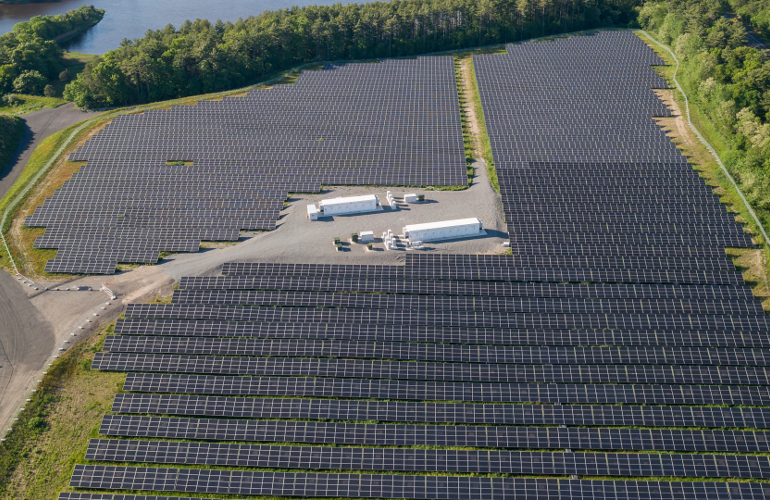
Borrego solar + storage installation in Assonet, Massachusetts. (Credit: Greg M. Cooper/Borrego)


It’s been reported that the PV industry is operating at a 6% average production shortfall, and this type of single-digit shortfall can have a dramatic 40% reduction in equity cash flows over a 10-year period. As outlined in a recent webinar with Wood Mackenzie and kWh Analytics, many system owners have no choice but to narrow O&M scopes that are outsourced to third-party O&M service providers, opt to perform some elements internally or forgo them all together with the hope that it will all work out in the end.

This dynamic needs to shift to responsible long-term O&M planning to help system owners gain back the most financial value from their solar assets. Here are some key considerations for thinking long-term about solar plant performance.

Preventative vs. corrective maintenance
Asset owners know that preventative maintenance for solar projects is table-stakes for solar asset management — for long-term system health, corresponding asset value and ensuring that critical warranties on expensive equipment are not voided. As the WoodMac webinar suggests, preventative maintenance alone isn’t enough to maximize long-term solar plant performance and obtain the most value from an asset.

Corrective maintenance issues regularly arise, whether they impact availability. As an example, Borrego O&M manages over 1,000 PV sites totaling 1.2 GW across the United States. With these project sites under its care, Borrego has successfully executed 2,100 corrective O&M services needed in 2021 so far. These reactive issues occurred in approximately 57% of the Borrego fleet. In other words, half of the project sites under Borrego care required 4.2 “unplanned” services by the end of Q3-2021.

In Borrego’s experience, when corrective maintenance is prioritized over preventative care, we see a 2% overall raw availability increase in site performance.

There is a wide range of corrective O&M issues that we commonly see working on over 1.2 GW of large-scale solar power plants. The majority are system outages, utility and non-utility caused. Other common problems include failed termination, external damage, inverter failures with total replacement needed, and failed breakers, fuses or other internal components. These commonly occurring issues are some of the most significant causes of lowered system production, and they typically fall outside the scope of most preventative maintenance packages.

Beyond maintenance-related issues
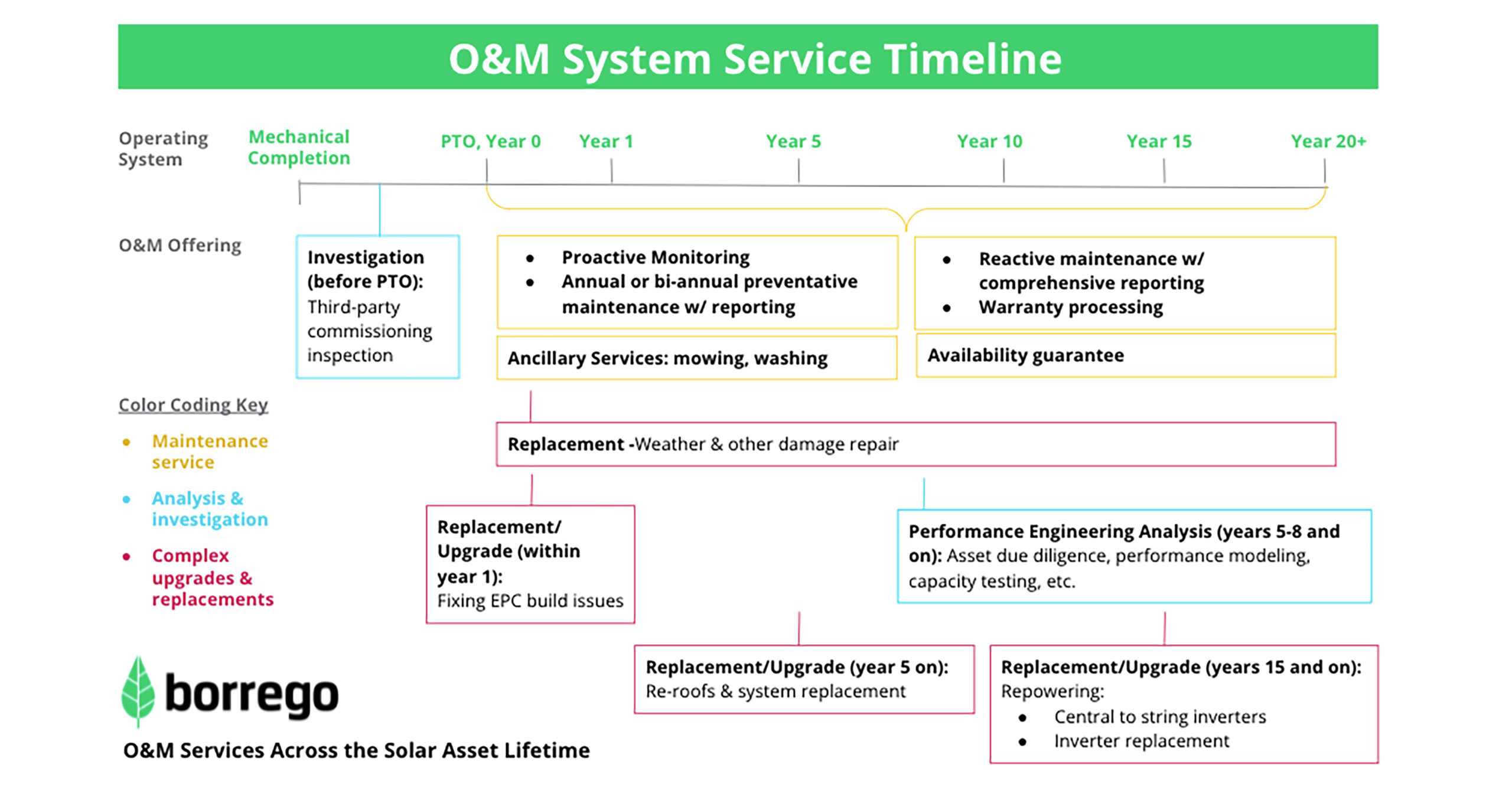
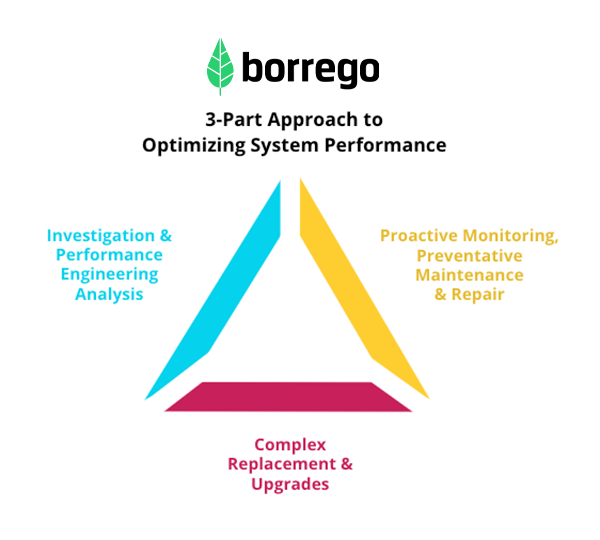
There are instances when an asset owner may need special O&M services, depending on the complexity and skills required to solve the cases that arise. These additional services can include performance engineering analysis, site investigations, upgrades and complex replacements. Some of these issues occur at specific times during solar asset operation, such as inverter-related replacements and upgrades around years 15 and on. Other O&M problems can occur any time during the asset life when needed, such as weather-related damage. The diagram below illustrates the most common O&M issues and service needs across the asset lifetime.

Here is a brief rundown of the timing and typical scope of some of the most common O&M repair services needed for solar power plants:

EPC phase and Year 1

Years 5-8 and beyond

Years 15 and beyond

Any time

Maximizing performance of solar assets

These examples illustrate how a long-term mindset is needed to improve performance and system health issues and ultimately increase the value of solar assets. Borrego operationalizes this long-term mindset with a team of technical subject matter experts who investigate, troubleshoot, repair and upgrade large-scale solar systems. They draw from extensive field experience and technical analysis on the more than 1.2 GW that Borrego manages.

Borrego provides a three-part approach to its O&M service offerings to support customers with the three core areas facing their system’s performance across the entire solar asset lifetime:


Read the article on Solar Power World 

O&M Strategy: Navigating Common Contracting Pitfalls

In our previous O&M strategy blog post, we focused on key considerations for developers and asset owners when selecting a solar and storage operations and maintenance (O&M) provider. We touched on the importance of training and experience, the use of aerial inspection and data management technology, warranties, and safety. This post will focus on some common contracting fails and pain points and offer advice on how to navigate them.

Prioritize O&M for the Long Term

One issue we see with some developers and asset owners is a failure to prioritize O&M for the long term over the lifecycle of the asset. Too often O&M ends up under budgeted or even eliminated in an attempt to save money. A solar plant without a sound O&M program in place will likely underperform, endure higher overall operating costs, and see the savings gained from low-balling O&M eliminated because of costly recurring repairs, uneven service, warranty issues and innumerable truck rolls.

While defining project details and digging into the assumptions baked into the O&M proposals may take more time or resources than originally anticipated, it is essential to finding a provider that actually offers the best value — and won’t increase the price later through change orders from misaligned desires and expectations. Planning for — even designing for — operations and maintenance from the beginning of a project’s life cycle guarantees a better return on investment, especially for a long-term owner or for someone who hopes to sell the asset after a few years.

Don’t Overlook Preventive and Corrective Maintenance  

Asset owners should always look closely at their O&M scope of work to see if it lists specific tasks with specific time requirements. Some service providers include a lot of vague language, which when digging into the details might only mean that they provide system monitoring and nothing else. We believe that providing preventative maintenance, including system washing and corrective maintenance for problems that may occur, helps get the most value from a solar system investment.

Many customers don’t fully grasp the costs involved for what would seem to be the most basic aspects of site O&M. While the “wash, mow and blow” model may seem simple, this is a hidden cost center if not approached with diligence and consistency. In fact, market research group Wood Mackenzie has estimated that vegetation management, corrective maintenance and module cleaning can add up to 40-45% of a solar project’s total O&M costs.

Some loss-leader O&M contracts often exclude these essential services. Errors made by inexperienced subcontractors can also add up to another painful cost center. For example, using a mop or another inappropriate cleaning brush can scratch the microetching on the module glass (which will reduce efficiency), while failure to account for water runoff after cleaning could lead to issues and possible fines from municipal authorities.

Keeping a Lid on Truck Rolls

One of the most common activities in the O&M business is the proverbial truck roll — when the service team goes to the customer site to make repairs, perform maintenance and conduct other operational functions. The truck roll is also one of the most abused aspects of O&M. Some providers even base their revenue models on the number of truck rolls they can make, charging the customer for each roll, regardless of whether they are necessary or not. Just because a warning light is blinking does not mean it’s time to roll a truck. It could just be a glitch in the communications system.

Borrego’s service programs bake in an unlimited number of truck rolls, making it in our best interest (and the customer’s) to be diligent and frugal about when we do send our teams to a job site. By using the data and analytics generated from Borrego’s computerized data management system, we can be strategic about rolling trucks. The more preventive and proactive we are, the better, allowing us to deal with system performance events before they become a problem.

Don’t Lose Revenue Over Response Times and Spares 

Response time to site and spare part availability are often cited as two of the top culprits of lost revenue for solar plants. If an O&M provider doesn’t have a firm guarantee for response time to site (within 24 hours is standard for a major event, for example) and some form of recourse to enforce this guarantee, that is a surefire recipe for asset-owner disappointment. When it comes to spares and spares storage, it’s important to know the service provider’s assumptions on what spare parts are on hand and which are included at no additional fee, with inverters being the major item. Even small items like fuses and switches can be points of failure. Replacing them can add to time and materials costs, and yet they are sometimes not included in the spares inventory. Borrego’s spares management processes, based on our years of experience and a database of hundreds of different components, helps reduce asset owners’ risk.

Be Clear About Warranties 

Warranties can be a major O&M pain point if they are not addressed thoroughly in the contract. Buyers should distinguish between warranties provided as part of the solar EPC scope and warranties provided by the O&M contractor. There are maintenance consumables such as filters, fuses and wiring that typically fall outside of warranty coverage. These costs often land within a grey area in the bid stage. Many O&M service providers exclude these unless specifically instructed by the system owner to include them.

Safety Is Paramount

As mentioned in our previous O&M blog, safety should be the top priority in any O&M program. It is often easy to identify which bidders take safety seriously, and which are simply using boilerplate language. Failing at safety can be the difference between protecting the life and health of field technicians and exposing them to serious or even fatal injury. Here are some safety-related questions asset owners should ask O&M providers during the proposal process:

• Does the provider share an O&M-specific health and safety manual?

• Are there regular O&M-specific safety trainings taking place for routine work tasks as well as specific ones from OEMs? Are these items outlined in their proposal?

• What does the O&M service provider say about their experience maintaining solar equipment, and is their experience outlined in their proposal? For example, Borrego has extensive solar experience, with 1.2 gigawatts of solar projects under contract, and has strategic relationships with most of the leading component suppliers.

by Lee Alnes, Senior Business Development Account Executive, O&M, Borrego

Eyes in the sky: How solar plant owners can benefit from aerial inspection technologies


Aerial inspection, paired with solar-specific data models and analytical software, has become one of the fastest-growing technologies in solar plant operations and maintenance (O&M).

Depending on the use case, aerial inspection can be done by unmanned drone or manned aircraft, and with satellite imagery also used to assist with data model generation.

  • Enhancing plant performance and minimizing production loss
  • Creating documentation for warranty claims and insurance
  • Initiating predictive maintenance
  • Predicting pre-failure anomalies
  • Reducing investment risk
  • Increasing worker safety.

Software enables this process to scale across the solar industry by analyzing utility-scale and commercial and industrial (C&I) datasets in bulk and standardizing the reporting process. It accurately identifies, classifies, and prioritizes all anomalies and provides the exact onsite location for efficient remediation.

While the O&M and asset management benefits of aerial inspection and data analysis are numerous and increasing, this article will focus on a few practical, boots-on-the-ground/wings in-the-air examples of improvements these new technologies have delivered.

Beyond I-V curve tracing
Solar O&M managers have traditionally relied on I-V curve tracing (current–I–and voltage–V) to offer the asset owner a broad-spectrum review of site performance at the string and combiner levels during the maintenance process. This tool is used to help determine issues such as whether there is a string offline, whether panels are failing in some sort of serial or design defect manner, or if a lightning strike or other event has caused a non-obvious production guarantee issue not detected by the plant’s monitoring system.

While both I-V curve tracing and the less-expensive voltage current inspection method can be useful in identifying some symptoms of underperformance, they also have some disadvantages.

For example, I-V curve tracing works really well to measure the degradation of individual PV panels to see if the panels are following the guaranteed production profile. But, when used as a tool to diagnose what’s going on with an entire string or multiple strings, the results are more challenging to interpret.

A “digital twin” uses as-built drawings to create a standardized data model that provides the intelligence of electrical relationships within the PV system, with every panel represented in terms of location and those relationships.

Because the I-V curve measures many other things besides the panels themselves, it can be difficult for a field technician to clearly determine if there is some problem that he or she should investigate. The I-V curve may look irregular, but figuring out what is behind the cause of that irregularity is not straightforward. From a training perspective, it can be hard to establish clear guidelines for what technicians should do when they see certain things and decide whether or not to investigate.

In addition, I-V curve tracing presents a safety risk. Technicians are often doing I-V curves from a combiner box, unterminating and terminating parts of the system. It’s not always easy to run all the systems when wearing all the necessary safety gear. Solar components like connectors and termination blocks were not designed to be disconnected and reconnected regularly, not multiple times a year or even once a year. Usually, these devices are locked into place, and that’s where they sit.

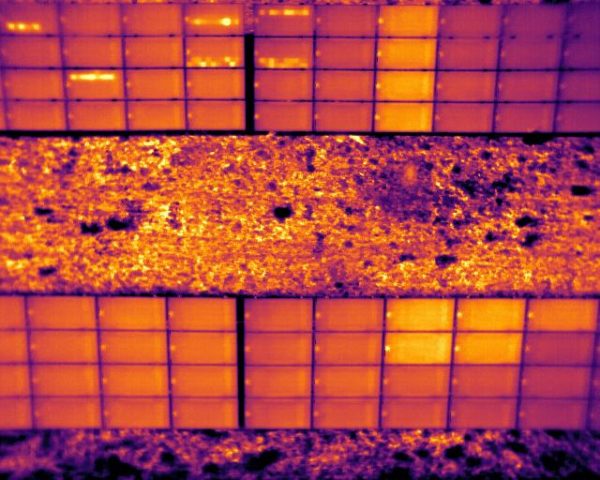
Different module heat signatures demonstrate aerial thermography’s ability to identify hotspots and other anomalies.Image: Borrego

Other issues with I-V curve tracing include a lack of real-time, continuous diagnostic information leading to under-detection of defects or underperformance between inspections, as well as the additional cost of sending technicians to the work site with incomplete information or guidance to search for supposed problems.

I-V curve testing is time-consuming as well, as it takes hours for each megawatt of installed capacity. Documentation and reporting to the customer can also lack clarity and make it difficult for them to interpret and act on the findings. Put all these factors together, and I-V curves are not highly effective as a maintenance method to determine if there is an overall problem going on.

Bird’s eye view
While aerial thermography was considered experimental several years ago, it has become increasingly required by asset owners and used by operators. Most O&M contracts include the use of thermal imagery as part of the maintenance package, albeit by a ground technician using a hand scanner. This approach is cumbersome, time-consuming, and expensive. Enter aerial inspection.

Aerial thermography is quicker, more cost-effective and predictable compared to boots-on-the-ground manual inspections. It only takes hours to inspect a large PV power plant; the granular data collected down to the sub-module level provides actionable evidence of root cause issues.

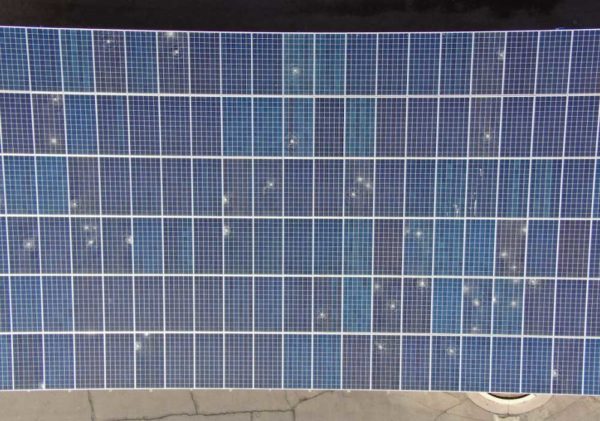
The use of high-resolution color photography from aerial inspections can help settle warranty claims, such as the hail damage on the array seen here.

Contrast this with the time- and labor-intensive interpretation of I-V curves or individual handheld thermal images that were done at different times of the day or week under changing weather conditions. The O&M and asset management teams can take the results and analysis from the eyes in the sky and identify specific work site locations that need corrective maintenance. They then can prioritize their punch list based on the impact the anomalies could have on performance. For the owner, aerial thermal images and related analyses are clear, color coded, and easy to understand.

Thermography is only part of the aerial inspection story. Aircraft are also equipped with high-resolution color cameras to help stratify the actual cause of an anomaly detected by the thermographic apparatus. Cracking and internal hotspots can all look similar on thermal images; photos offer the ability to go beyond classifying the issue as merely a “hotspot” and get to the root cause of the problem.

Underpinning all of this is the use of a “digital twin,” which leverages as-built drawings to create a standardized data model that provides the intelligence of electrical relationships within the inverters and combiners of the PV system, where every panel is represented properly in terms of location and those relationships. On the ground, technicians can use smartphone or tablet apps to use the data model to quickly go to the problem areas that need attention. Additional data, such as serial numbers and vital documentation, can be associated with elements of the digital twin and shared with the appropriate counterparties.

Changes in warranty claims
One area where aerial inspection technologies have made a profound impact is warranty claims. Until recently, the prevailing attitude in the solar industry has been that if I-V curve tracing could be done on every maintenance procedure, that data would be all the documentation needed to file warranty claims.

Many OEMs are accepting aerial data on its own, without additional I-V curve information.


This approach can be costly, unwieldy, and open to dispute. Seasoned O&M professionals can share many stories about butting heads with module and inverter OEMs on identifying, and especially documenting, warranty claims.


Aerial inspection brings a clarity and relative simplicity to the warranty claims process. The integrity of the data and transparency of the aerial inspection and analysis process has made module anomalies easier to identify and prove potential warranty claims than the traditional I-V curve methods. Many OEMs are accepting aerial data on its own, without additional I-V curve information.

Aerial inspection hardware and software offers asset owners and O&M providers a way to communicate clearly and quantitatively with each other. A digitized, audit-friendly platform provides detailed classification and location of anomalies, optimizing workflow and system performance, reducing labor costs by effectively deploying field technicians and allocating resources, and improving worker safety.

Nikhil Vadhavkar is CEO and cofounder of Raptor Maps. Joe Thorpe is senior VP of O&M for Borrego.

Read the article on

How does O&M add value to solar power plants? Let me count the ways.

Published in Solar Builder

Borrego rebranded this year and shifted its focus after implementing a host of organizational changes in 2020. Its three business units — development, EPC, and O&M — have already begun operating independently, drawing on each other’s strengths when needed. We asked them how they built up that O&M business unit specifically — how do you make O&M a value adder versus a problem center? Here is what Joe Thorpe, VP of O&M had to say.

In the not-so-distant early years of the solar boom in the U.S., there were many who believed solar power plants were essentially a “maintenance-free, set it and forget it” asset. Some occasional module cleaning and weeding here, some minor inverter checks there, would be all that was needed as long as the plant performance was maximized and kept performing at the contracted levels—and operating costs were minimized in a race to the bottom.

Such a laissez-faire approach took a toll on the equipment. The fruits of that negligence have created a niche business opportunity for companies like ours to refurbish those older projects and bring them back to industry standards. But it’s not the kind of work we would prefer to do. Thankfully, that approach has largely gone out of style as the solar industry has matured and most stakeholders have come to realize the value of a long-term strategic approach to operations and maintenance (O&M) that doesn’t sacrifice plant health for short-term gain.

At its core, O&M is about two things, one more obvious and the other less so.

The first role of O&M is to ensure that the equipment is operating at its highest possible potential and is running safely, all while staying within a reasonable budget. A comprehensive O&M program combines preventive, corrective and predictive best practices to minimize system downtime, maximize uptime, and optimize performance, and does so without incurring unnecessary truck rolls or increasing safety risks.

The other main purpose of O&M is not as widely appreciated — to maintain the asset’s value at the highest possible level. To accomplish that mission, a capable O&M team does the following:

This approach applies to the owner who plans (for now) to keep the asset and wants to ensure they hit the power purchase agreement numbers as well as to the developer keen on flipping the asset within a few years of PTO.

If the time comes when the current asset owner decides to sell the plant, and it has been well-maintained, a third-party independent engineering firm auditor will evaluate the system’s health and confirm that it is in fantastic condition. If the maintenance of the plant has been neglected, that same auditor will write up a long punchlist of cracked cables, mismatched connectors, rusty combiner boxes, regularly overheating inverters with reduced lifetimes, degraded modules and other signs of O&M negligence that will push the sale value down into the bargain basement.

It’s not unlike buying a previously owned car: when the owner has diligently maintained the vehicle and kept a comprehensive record of all servicing and repairs, he or she will get a better selling price than someone who has done little more than change the oil once in a while, kept spotty records, and generally run the car into the ground.

It’s all well and good to claim to have a solid O&M program, but if you don’t have properly trained personnel, the customer will not be satisfied. I’m surprised that some of our competitors still roll trucks to jobsites for every alert or minor problem, with an underlying attitude of “if it’s switched off, then switch it back on,” rather than getting to the root cause and correcting the underlying issue.

A smart O&M team should need only one site visit, getting it right the first time and bringing the asset back online in a timely manner.

By creating what we call a “pending work order” document, work items that are not significant enough to require a truck roll in and of themselves are grouped together for the next time a truck roll is planned. For example, a blinking communication alert may be annoying, but it’s not enough to have someone roll out to the site for several hundred dollars a pop. Better to add that to the pending work. The next time the team arrives, they can work from a list of things that need to be corrected that have already been identified and can be combined into a single visit.

We are also automating our certificates of calibration and other processes to eliminate manual reporting. Pre-built checklists that include all the assets to be touched, what to do and where, and any relevant notes are programmed into a smartphone app that allows our technicians to easily auto-generate a report to the customer. Our customers also have access to a live view of their system via our network operations center. O&M is becoming even more digitalized with predictive capabilities based on modeling and simulation and an ever-growing trove of field performance data.

At the end of the day, O&M still comes down to keeping the customer satisfied. I’ve found that most customer frustrations with their provider stem from one or more of the following things:

While the best O&M providers tick all those boxes most of the time, we still have room for improvement.

Joe Thorpe has been with Borrego for four years and was recently promoted to senior VP of O&M for Borrego. He has more than 24 years of experience managing and directing distributed generation and utility-scale solar and wind operations, maintenance and services.